
2027 Citroën ë-C3 Introduction – The arrival of the Citroën ë-C3 marked a turning point in Europe’s affordable electric vehicle market. Designed to bring battery-powered mobility within reach of mainstream buyers, the compact hatchback combined distinctive French styling, everyday practicality, impressive comfort, and an attractive price point. Unlike many electric vehicles that positioned themselves as premium products, the ë-C3 focused on delivering real-world usability without demanding a premium budget. As electrification continues to accelerate across Europe and beyond, attention is already turning toward what the 2027 Citroën ë-C3 could offer.
At the time of writing, Citroën has not officially announced a 2027 ë-C3 or released confirmed specifications, pricing, or launch details for that model year. Therefore, the information presented throughout this article is based on the current ë-C3 platform, Stellantis’ electrification strategy, industry trends, and reasonable market expectations, rather than on official confirmation. Any specifications, driving range figures, pricing, or release schedules discussed below should be viewed as estimates rather than confirmed facts.
If Citroën continues refining one of its most promising electric models, the 2027 Citroën ë-C3 could become even more efficient, technologically advanced, and comfortable while remaining one of the most affordable electric hatchbacks on the market.
The European automotive market has undergone a remarkable transformation over the past decade. Rising fuel prices, increasingly strict emissions regulations, and expanding charging infrastructure have encouraged more drivers to consider electric vehicles for everyday transportation. However, affordability remains one of the biggest obstacles preventing widespread EV adoption.

Citroën recognized this challenge early and responded by introducing the ë-C3 as an accessible electric hatchback designed for ordinary families rather than luxury buyers. Instead of focusing on extreme acceleration or extravagant technology, the ë-C3 emphasized comfort, practicality, efficiency, and low ownership costs. This philosophy perfectly reflects Citroën’s long-standing reputation for building cars that prioritize passenger well-being and everyday usability.
As battery technology continues to evolve and consumer expectations increase, the next generation of the ë-C3 is expected to build upon those strengths. Buyers now expect even compact electric vehicles to offer greater driving range, faster charging, improved digital connectivity, enhanced safety systems, and higher-quality interiors.
Should the 2027 Citroën ë-C3 arrive within the next few years, it will likely continue serving as one of the most accessible entry points into electric mobility while incorporating meaningful improvements that enhance the ownership experience without significantly increasing costs.
2027 Citroën ë-C3 Redesign
Although Citroën has not officially revealed a redesigned 2027 ë-C3, automotive analysts expect the company to continue refining the model’s distinctive styling rather than introducing a dramatic transformation.
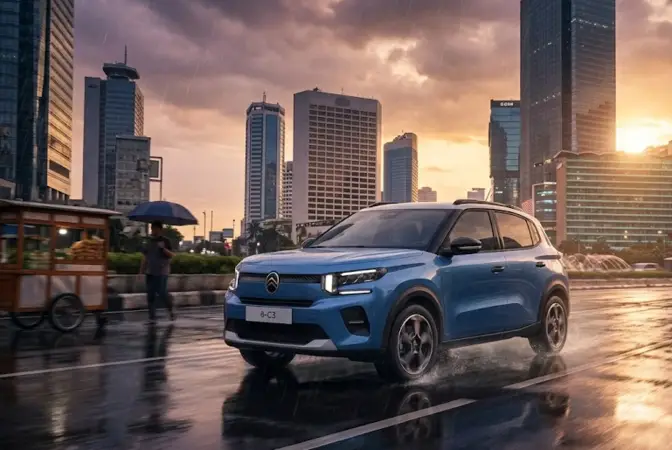
The current ë-C3 already embraces Citroën’s bold design language, characterized by clean geometric shapes, expressive lighting, and crossover-inspired proportions. A future update could further modernize these elements while improving aerodynamic efficiency to extend driving range.
The front fascia may receive slimmer LED headlights, a revised interpretation of Citroën’s signature lighting design, and a cleaner bumper with optimized airflow management. Because electric vehicles require less engine cooling than gasoline-powered cars, designers have greater freedom to minimize grille openings and improve aerodynamic performance.
Viewed from the side, the ë-C3 is expected to retain its compact dimensions and upright stance while introducing smoother body surfacing, redesigned alloy wheels, and subtle aerodynamic refinements. Flush detailing around mirrors and body panels could further reduce drag, improving efficiency at higher speeds.
At the rear, updated LED taillights, revised bumper styling, and a more sculpted tailgate may provide a fresher appearance while maintaining the instantly recognizable character of the ë-C3.
Beyond aesthetics, software integration is expected to play a much larger role in the redesign. Citroën will likely introduce faster infotainment software, expanded over-the-air update capability, smarter navigation that incorporates charging stops, and more sophisticated voice recognition.
Structural refinements may also accompany any exterior changes. Improvements in battery packaging and chassis rigidity could contribute to greater interior space, enhanced ride comfort, and improved safety without significantly increasing vehicle weight.
2027 Citroën ë-C3 Exterior and Interior
One of the defining characteristics of the ë-C3 has always been its approachable and cheerful personality, and the 2027 model is expected to continue expressing that identity through thoughtful design rather than excessive complexity.
The exterior will likely maintain its crossover-inspired stance, which provides a slightly elevated driving position while preserving the maneuverability of a compact hatchback. Updated LED lighting, fresh paint options, redesigned wheels, and improved aerodynamic detailing could create a more premium appearance while remaining unmistakably Citroën.
Citroën’s emphasis on personalization may also continue through contrasting roof colors, distinctive trim accents, and multiple customization packages that allow owners to tailor the vehicle to their individual tastes.
Inside, the cabin is expected to receive significant upgrades. Improved soft-touch materials, redesigned seating, and higher-quality trim pieces could elevate the overall perception of quality without compromising affordability.
The dashboard may adopt a cleaner layout centered on a larger touchscreen featuring Stellantis’ latest infotainment software, which is expected to become standard or more widely available, while cloud-connected navigation, remote charging management, and smartphone-based vehicle monitoring could enhance daily usability.
A configurable digital instrument display would likely provide clear access to battery information, remaining driving range, navigation guidance, charging status, and energy consumption data.
Passenger comfort has always been a hallmark of Citroën engineering, and the 2027 ë-C3 is expected to continue this tradition. The company’s Advanced Comfort seats may receive further ergonomic improvements, offering better support during both city commuting and longer journeys.
Ride quality is also likely to remain a defining feature. Citroën’s suspension philosophy prioritizes absorbing road imperfections over sporty handling, making the ë-C3 particularly well-suited to urban environments and imperfect road surfaces.
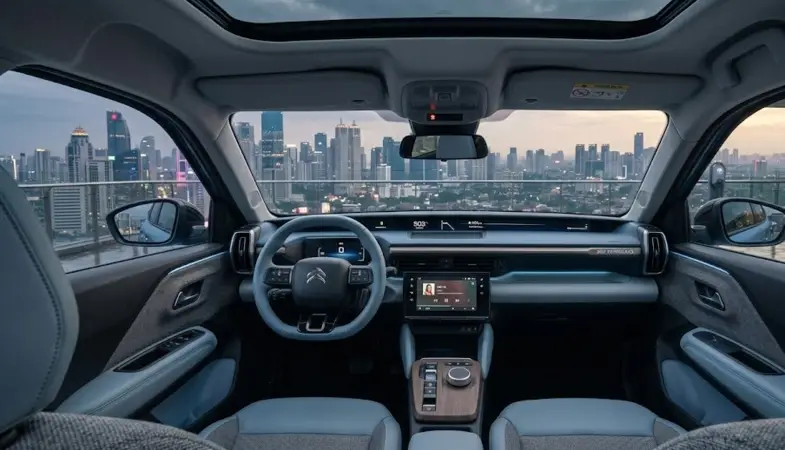
Storage practicality should continue to improve through better center-console organization, larger door compartments, wireless charging solutions, and flexible cargo space. Rear passengers may benefit from additional USB-C charging ports and improved seating comfort.
Safety technology is expected to receive meaningful enhancements as well. Although official equipment has not been announced, industry observers anticipate expanded driver-assistance features, including adaptive cruise control, automatic emergency braking, lane-keeping assistance, traffic sign recognition, blind-spot monitoring, rear cross-traffic alert, and intelligent parking support, depending on the trim level.
2027 Citroën ë-C3 Engine and Performance
The future 2027 Citroën ë-C3 will naturally continue relying on battery-electric propulsion, but several important improvements are widely expected.
Citroën has not officially confirmed battery specifications or powertrain details for a future model. However, automotive analysts anticipate incremental improvements in battery chemistry, thermal management, and software optimization that could increase efficiency without dramatically increasing production costs.
A revised lithium-ion battery pack with greater energy density may allow the 2027 ë-C3 to travel farther on a single charge while maintaining similar vehicle dimensions. Industry expectations suggest the next-generation model could achieve an estimated driving range of 250 to 300 miles, depending on battery capacity, driving conditions, and regional testing standards. These figures remain speculative because Citroën has not released official performance data.
Charging capability is another area likely to receive meaningful upgrades. Faster DC charging speeds, improved battery preconditioning, and smarter charging management software could significantly reduce charging times during longer journeys while helping preserve battery longevity.
Electric motor efficiency is also expected to improve. Although outright performance is unlikely to become the vehicle’s primary focus, smoother power delivery, more responsive acceleration, and quieter operation could further enhance everyday driving enjoyment.
Citroën has traditionally prioritized comfort over aggressive handling, and that philosophy is expected to continue. Revised suspension tuning, improved chassis rigidity, and optimized weight distribution could produce an even more composed ride while maintaining predictable handling characteristics.
The low center of gravity created by the battery pack naturally contributes to stable cornering and confident highway behavior, while regenerative braking systems may become increasingly customizable to maximize energy recovery according to driver preference.
Multiple driving modes may also remain available, allowing drivers to balance efficiency, performance, and climate control depending on traffic conditions and battery state.
Rather than competing through headline acceleration figures, the 2027 ë-C3 is expected to focus on refined operation, low running costs, dependable efficiency, and exceptional everyday usability the qualities most valued by mainstream electric vehicle buyers.
2027 Citroën ë-C3 Price and Release Date
As of now, Citroën has not officially announced the 2027 ë-C3 or published pricing, specifications, or launch timing.
Given the model’s positioning as an affordable electric hatchback, industry analysts expect Citroën to continue emphasizing competitive pricing. Depending on battery size, equipment level, and regional incentives, entry-level versions could reasonably start at €24,000-€27,000, while higher trim levels with larger battery packs, enhanced technology, and premium comfort features may range from €29,000 to €34,000. These figures represent market estimates rather than official pricing.
Regarding availability, many automotive observers believe Citroën could introduce an updated ë-C3 during late 2026 or sometime in 2027, although no official reveal date or production schedule has been confirmed.
Regional pricing and availability will naturally vary according to taxation, government incentives, production capacity, and local market requirements.
2027 Citroën ë-C3 Personal Note
The Citroën ë-C3 demonstrates that electric mobility need not be expensive or intimidating. By focusing on comfort, practicality, affordability, and distinctive personality, Citroën has created an electric hatchback that feels approachable rather than exclusive.
That philosophy may become increasingly important as electric vehicles transition from niche products to everyday transportation. Most buyers are not searching for extraordinary acceleration or luxury appointments they want dependable, efficient, comfortable vehicles that fit naturally into their daily lives.
If the 2027 Citroën ë-C3 introduces the improvements many analysts expect, including greater driving range, faster charging, smarter digital technology, enhanced safety systems, and an even more refined cabin, it could strengthen its position as one of Europe’s most attractive affordable electric cars.
Although official details remain unavailable, the future of the ë-C3 appears promising. Citroën has consistently demonstrated that thoughtful engineering and customer-focused design can deliver an enjoyable ownership experience without excessive complexity or cost. Should the next-generation ë-C3 continue to build on those strengths while embracing the latest developments in battery technology and connected mobility, it could become one of the benchmark electric hatchbacks for drivers seeking practical, comfortable, and accessible zero-emission transportation well into the second half of the decade.
Also read the article : https://autovoltahub.com/2027-chery-j6-exciting-details-on-cherys-rugged/