
2027 Ford Explorer EV Introduction – The Ford Explorer has spent more than three decades earning its reputation as one of America’s most recognizable family SUVs. From suburban driveways to cross-country road trips, the Explorer has consistently delivered the versatility, comfort, and confidence buyers expect from a midsize utility vehicle. As the automotive industry accelerates toward electrification, Ford is preparing to expand the Explorer legacy even further with the anticipated 2027 Ford Explorer EV, a model expected to combine zero-emission driving with the practicality that has made the Explorer nameplate a household favorite.
While Ford has already introduced an electric Explorer in selected European markets, the 2027 Ford Explorer EV model is widely expected to represent a more advanced evolution, potentially featuring updated battery technology, improved software, longer driving range, and a design language that aligns with Ford’s next generation of electric vehicles. Although official specifications remain under wraps, industry analysts believe the upcoming Explorer EV could become one of the company’s most important products as demand for electric family SUVs continues to grow worldwide.
Competition in the electric SUV segment has become more intense than ever. Models such as the Hyundai Ioniq 9, Kia EV9, Tesla Model Y, Chevrolet Blazer EV, Honda Prologue, and several premium European offerings have raised consumer expectations regarding driving range, charging speed, interior quality, and digital technology. To remain competitive, Ford is expected to deliver meaningful improvements throughout the Explorer EV while preserving the practicality and versatility that have defined the Explorer lineup for generations.
Rather than chasing dramatic styling changes or headline-grabbing performance figures alone, the 2027 Ford Explorer EV is expected to focus on creating a well-rounded ownership experience. Buyers increasingly prioritize efficiency, family-friendly comfort, intelligent safety systems, and seamless digital connectivity alongside traditional SUV capabilities. If industry expectations are accurate, Ford’s newest electric Explorer could represent one of the brand’s most balanced and technologically advanced SUVs to date.
2027 Ford Explorer EV Redesign
The 2027 Ford Explorer EV is expected to receive a substantial redesign that reflects the company’s evolving electric vehicle philosophy while maintaining enough visual familiarity to preserve the Explorer’s strong brand identity. Instead of completely reinventing the SUV, Ford is likely to refine nearly every exterior surface with greater emphasis on aerodynamic efficiency, premium styling, and modern proportions.
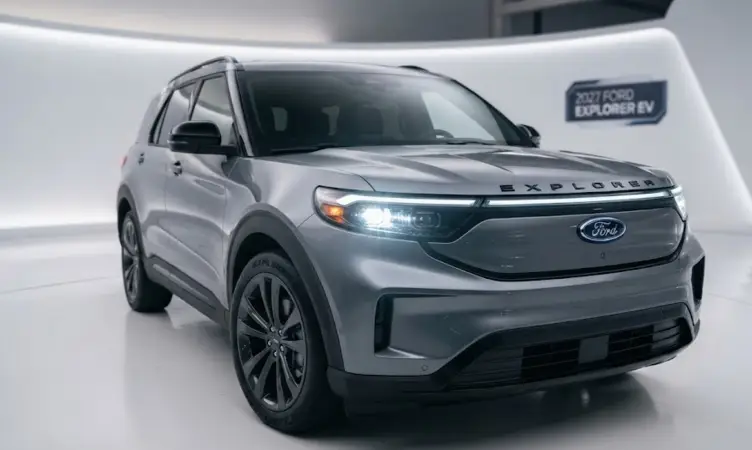
The front fascia will probably become cleaner and more streamlined than its gasoline-powered counterpart. Since an electric powertrain requires less cooling airflow, designers are expected to minimize the traditional grille in favor of a smooth front panel accented by a distinctive illuminated light signature. Slimmer LED headlights could extend toward the fenders, giving the SUV a wider and more contemporary appearance.
Aerodynamics will almost certainly become a major priority throughout the redesign. Small improvements to airflow around the front bumper, wheel arches, underbody, and rear spoiler can significantly increase driving range, making every design detail important. Flush-mounted door handles, reshaped mirrors, active grille shutters where necessary, and optimized wheel designs are all features that industry observers expect to see incorporated into the new Explorer EV.
Beneath the bodywork, the vehicle is expected to benefit from advancements in Ford’s dedicated EV architecture. Although the company has not confirmed platform details for the 2027 model, analysts anticipate improvements in battery integration, structural rigidity, thermal management, and overall manufacturing efficiency. These refinements could contribute to better ride quality, enhanced safety, and increased interior space without dramatically increasing vehicle dimensions.
The redesign is also likely to extend into the digital ecosystem. Modern electric vehicles continue evolving through software as much as hardware, and Ford is expected to enhance its over-the-air update capabilities. Future Explorer EV owners may receive regular improvements to infotainment, battery optimization, navigation, driver assistance systems, and overall vehicle functionality without needing to visit a dealership.
Artificial intelligence could also become a more prominent feature of the driving experience. Smarter energy management systems may automatically optimize battery performance based on driving habits, weather conditions, elevation, and destination planning. Predictive maintenance features may also become more sophisticated, allowing the vehicle to monitor system health and notify owners of potential service requirements before issues arise.
2027 Ford Explorer EV Exterior and Interior
Visually, the 2027 Ford Explorer EV is expected to strike an appealing balance between rugged SUV capability and refined electric sophistication. Rather than adopting an overly futuristic appearance, Ford will likely maintain the Explorer’s strong, upright stance while introducing cleaner body lines and more sculpted surfaces that communicate efficiency and confidence.
The front end is expected to feature an updated full-width LED light bar connecting slimmer matrix-style headlights, creating a distinctive nighttime signature that aligns with Ford’s evolving electric design language. A reshaped bumper with integrated aerodynamic elements could further improve efficiency while adding a more premium visual character.
The side profile is likely to retain the Explorer’s familiar proportions, although smoother character lines and redesigned alloy wheels should enhance both aesthetics and aerodynamic performance. Depending on trim level, wheel sizes may range from approximately 19 to 21 inches, with lightweight construction helping improve efficiency while maintaining a comfortable ride.
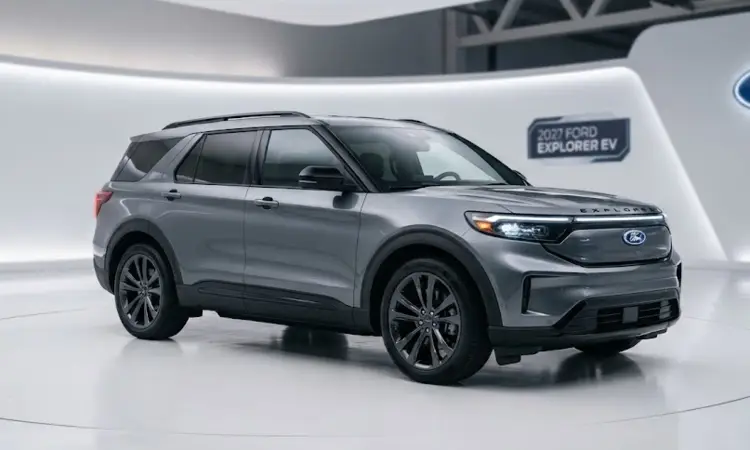
Around the rear, revised LED taillights, an integrated roof spoiler, and a cleaner tailgate design are expected to modernize the SUV’s appearance. Small aerodynamic refinements around the rear bumper and underbody could further reduce drag while contributing to a longer driving range.
Ford is also expected to expand the Explorer EV’s exterior color palette with several new premium metallic finishes and contemporary paint options. Contrasting roof colors, illuminated badges, and unique EV-specific styling accents could further distinguish the electric model from its gasoline-powered counterpart.
Inside the cabin, the most significant improvements are expected to become immediately apparent. As customer expectations for premium electric vehicles continue to rise, Ford will likely introduce higher-quality materials, more refined craftsmanship, and a cleaner dashboard layout centered around digital technology.
A large portrait-oriented touchscreen is expected to remain the focal point of the interior, powered by the latest generation of Ford’s SYNC infotainment system. Faster processors, sharper graphics, wireless Apple CarPlay and Android Auto, cloud-connected navigation, and advanced voice recognition are all widely anticipated features. Artificial intelligence could make voice interactions more conversational while simplifying common vehicle functions.
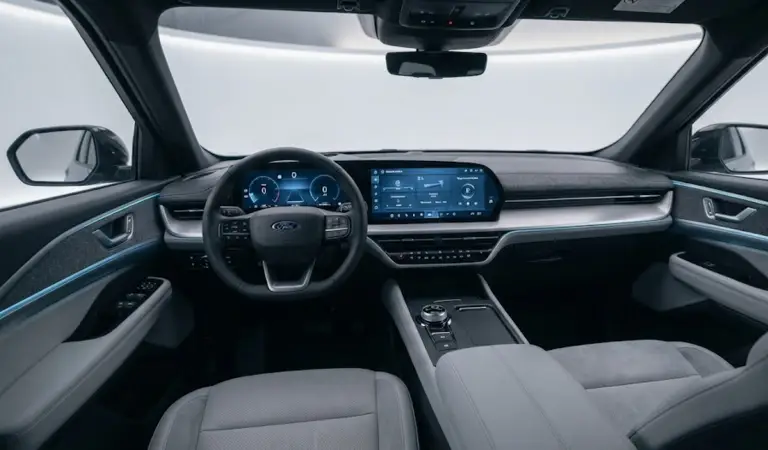
The fully digital instrument cluster is also expected to become more customizable, allowing drivers to prioritize navigation, battery information, efficiency statistics, safety alerts, or traditional driving data depending on personal preference.
Comfort improvements should play an equally important role. Front seats are expected to feature enhanced ergonomic design with heating, ventilation, multiple adjustment settings, and optional massage functionality on premium trims. Rear passengers may benefit from increased legroom, improved seat cushioning, additional USB-C charging ports, and enhanced climate control distribution.
Cargo versatility has always been one of the Explorer’s strengths, and the electric version is expected to continue offering generous storage capacity. A flat floor made possible by the dedicated battery platform could improve passenger comfort while maximizing interior flexibility. Fold-flat seating configurations and intelligently designed storage compartments should further enhance the SUV’s family-friendly appeal.
Sustainability is also likely to become a stronger focus throughout the interior. Industry expectations suggest Ford will expand its use of recycled plastics, eco-friendly upholstery materials, and responsibly sourced cabin components, allowing buyers to enjoy a premium environment while supporting broader environmental goals.
2027 Ford Explorer EV Engine and Performance
Although the Explorer EV eliminates the traditional gasoline engine, performance is expected to remain one of its defining characteristics. Instant electric torque, smooth acceleration, and refined power delivery have become essential attributes in modern electric SUVs, and the 2027 Explorer EV is widely expected to improve upon the capabilities of earlier models.
Ford has not officially confirmed powertrain specifications, but industry analysts anticipate that the lineup will include both single-motor rear-wheel-drive and dual-motor all-wheel-drive configurations. Entry-level models may prioritize efficiency for daily commuting, while higher trims could offer significantly stronger acceleration and enhanced all-weather capability.
Power output is expected to begin at approximately 300 horsepower for base versions, while dual-motor variants could produce somewhere between 400 and 500 horsepower depending on trim level. These figures remain speculative, but they would position the Explorer EV competitively within the growing midsize electric SUV segment.
Acceleration should be impressive across the lineup. Well-equipped all-wheel-drive models may reach 60 mph in approximately five seconds or less, delivering performance that rivals many premium luxury SUVs while maintaining quiet and effortless operation.
Battery technology is expected to represent one of the largest improvements over previous electric Ford models. Industry observers anticipate that Ford could introduce higher energy-density battery packs capable of increasing both driving range and charging efficiency without substantially increasing overall vehicle weight.
Depending on battery configuration and drivetrain, estimated EPA driving range could potentially fall between 340 and 420 miles on a full charge. These figures remain unofficial estimates based on industry expectations and should not be interpreted as confirmed specifications.
Charging capability is also expected to advance significantly. Under ideal conditions, future fast-charging systems may replenish battery capacity from approximately 10 to 80 percent in around 20 to 30 minutes, making long-distance travel considerably more convenient. Home charging solutions are also likely to benefit from smarter energy management software and expanded compatibility with residential solar systems.
Ride quality is expected to receive considerable attention from Ford engineers. Revised suspension tuning, improved chassis rigidity, and enhanced weight distribution could create a driving experience that feels both composed and engaging. The low center of gravity created by the underfloor battery pack should continue providing confident handling while maintaining the comfortable ride expected from a family SUV.
Ford’s BlueCruise hands-free highway driving system is also expected to become more capable. Future versions may offer smoother lane changes, expanded compatible road networks, improved traffic response, and more natural autonomous driving behavior, further reducing driver fatigue during extended highway journeys.
Safety technology will likely remain comprehensive, with advanced collision avoidance systems, adaptive cruise control, blind-spot monitoring, cross-traffic alerts, and intelligent parking assistance expected to be available across much of the lineup.
2027 Ford Explorer EV Price and Release Date
Ford has not officially announced pricing or production schedules for the 2027 Explorer EV. Nevertheless, industry experts expect the vehicle to compete in the midsize electric SUV segment, with pricing that reflects its expanded technology and improved battery capabilities.
Current estimates suggest that entry-level models could begin between $48,000 and $53,000, while mid-level trims featuring larger battery packs and additional equipment may range from approximately $56,000 to $65,000. Fully equipped premium variants could approach or exceed $70,000, depending on available technology packages and luxury features. These figures remain estimates and should not be considered official pricing.
Production is widely expected to begin sometime during late 2026 or early 2027, with customer deliveries potentially commencing during the first half of 2027. Market availability may vary by region depending on manufacturing capacity, battery supply, and Ford’s global rollout strategy.
Government incentives and regional tax credits may continue influencing effective purchase prices, although eligibility will depend on future regulations and local market policies that have yet to be finalized.
2027 Ford Explorer EV Personal Note
The Ford Explorer has always represented more than simply another SUV. It has become one of the defining family vehicles of the modern automotive era, evolving through changing technologies while consistently delivering practicality, versatility, and confidence. The upcoming Explorer EV appears ready to continue that tradition in an increasingly electric future.
What makes the anticipated 2027 Ford Explorer EV particularly compelling is its apparent focus on balanced improvement rather than dramatic reinvention. Longer driving range, smarter software, faster charging, higher-quality materials, and enhanced comfort all represent meaningful upgrades that improve everyday ownership instead of merely generating impressive marketing headlines.
If Ford successfully delivers the refinements that industry observers expect, the Explorer EV could become one of the company’s most important electric vehicles, appealing to families seeking the practicality of a midsize SUV without sacrificing modern technology or long-distance usability. The combination of spacious accommodations, advanced digital features, competitive performance, and recognizable Explorer styling has the potential to make it one of the strongest contenders in an increasingly crowded segment.
Until Ford officially reveals the 2027 Explorer EV, many details remain speculative. However, the direction appears clear. The next-generation model is expected to showcase Ford’s continued commitment to electrification while preserving the qualities that have made the Explorer one of the most trusted SUV nameplates for generations. For buyers preparing to embrace electric mobility without compromising everyday versatility, the 2027 Ford Explorer EV may ultimately prove well worth the wait.
Also read the article : https://autovoltahub.com/2027-ford-f-150-lightning-bigger-range-smarter/