
2027 Hyundai Ioniq 6 Sedan Revealed Stunning Design, Longer Range, and Next-Level Technology – remains one of the most ambitious manufacturers in the industry. Following the success of the Ioniq lineup, automotive enthusiasts are already looking ahead to the highly anticipated 2027 Hyundai Ioniq 6 Sedan. Building on the streamlined styling, cutting-edge technology, and impressive efficiency of previous models, the upcoming Ioniq 6 is expected to introduce significant improvements in design, performance, driving range, and intelligent features.

As consumers increasingly shift toward electric mobility, Hyundai aims to strengthen its position with a sedan that combines premium comfort, advanced engineering, and sustainable transportation. While Hyundai has not yet revealed all official specifications for the 2027 model, industry experts expect substantial upgrades that will help the Ioniq 6 compete with leading electric sedans from Tesla, BMW, Mercedes-Benz, and other emerging EV manufacturers. In this article, we take a detailed look at the expected exterior design, interior features, electric powertrain, release date, and pricing of the 2027 Hyundai Ioniq 6 Sedan.
2027 Hyundai Ioniq 6 Sedan Exterior Design And Interior Design
The 2027 Hyundai Ioniq 6 Sedan is expected to maintain the sleek aerodynamic silhouette that has become a defining characteristic of the model. Hyundai’s designers have consistently focused on maximizing efficiency through aerodynamic optimization, and the upcoming version will likely push those efforts even further.
The front fascia is expected to feature a cleaner and more futuristic appearance. Slim LED headlights will likely integrate seamlessly into the bodywork, creating a sophisticated and modern visual identity. Hyundai may also introduce a redesigned front bumper with improved airflow management to enhance efficiency and reduce drag.
In profile, the Ioniq 6 is expected to retain its coupe-like roofline. The smooth contours and flowing body panels should contribute to an exceptionally low drag coefficient, helping maximize driving range. Flush door handles are expected to remain, providing a cleaner appearance while improving aerodynamic performance.
The rear section may receive a substantial redesign. Industry observers speculate that Hyundai could introduce a more advanced LED light bar that spans the vehicle’s width. The signature pixel-inspired lighting technology that has become synonymous with Hyundai’s electric lineup will likely be further refined for a more premium appearance.
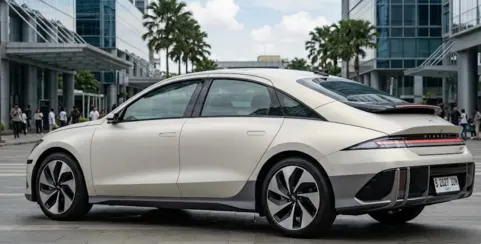
New wheel designs are expected to improve both aesthetics and efficiency. Hyundai may offer multiple wheel sizes, ranging from aerodynamic-focused designs for maximum range to sportier options for customers seeking a more aggressive look.
The overall dimensions of the sedan may increase slightly to provide improved interior space while preserving its sleek proportions. Lightweight materials and enhanced structural engineering could improve efficiency, safety, and handling.
Additionally, Hyundai is expected to introduce several new exterior color options. Premium metallic finishes, matte paint choices, and environmentally friendly paint technologies may become available, allowing buyers to personalize their vehicles more extensively than before.
Inside the cabin, the 2027 Hyundai Ioniq 6 is expected to showcase Hyundai’s latest advancements in comfort, connectivity, and digital technology. The automaker has consistently emphasized user-friendly design, and the next-generation Ioniq 6 should continue that philosophy.
One of the most noticeable upgrades could be a completely redesigned dashboard. A larger panoramic display may integrate seamlessly. This setup would create a cleaner, more futuristic environment while improving usability.
Premium materials are expected throughout the cabin. Sustainable fabrics, recycled plastics, eco-friendly leather alternatives, and soft-touch surfaces could reinforce Hyundai’s commitment to environmental responsibility without sacrificing luxury.
Passenger comfort is likely to receive significant attention. The front seats may feature improved ergonomics, enhanced adjustability, ventilation, heating functions, and advanced massage capabilities. Rear-seat passengers could benefit from increased legroom and headroom due to improvements in packaging efficiency.
Ambient lighting is expected to become more sophisticated. Drivers may be able to customize interior lighting themes based on mood, driving mode, or personal preference. The lighting system could also interact with vehicle alerts and notifications to enhance the overall user experience.
the cabin. Hyundai is expected to offer an upgraded infotainment platform featuring faster processing speeds, improved graphics, and enhanced voice recognition capabilities. Come standard, while over-the-air software updates should ensure the vehicle remains technologically current throughout ownership.

The integration of artificial intelligence may represent one of the biggest innovations. Hyundai could introduce a more intelligent virtual assistant that learns driver preferences and provides personalized recommendations for navigation, climate settings, charging schedules, and entertainment.
Cargo capacity should remain competitive within the segment. Improved battery packaging may create additional storage space, while a front trunk, commonly referred to as a “frunk,” could offer extra convenience for daily use.
Noise insulation is also expected to improve significantly. Enhanced sound-deadening materials and acoustic glass may create a quieter cabin environment, making long-distance travel more enjoyable.
2027 Hyundai Ioniq 6 Sedan Engine and Electric Powertrain
Although electric vehicles do not use conventional gasoline engines, the powertrain remains one of the most important aspects of any EV. The 2027 Hyundai Ioniq 6 is expected to receive substantial upgrades in battery technology, motor efficiency, and charging capabilities.
Industry analysts anticipate that Hyundai will continue utilizing its advanced electric vehicle platform while incorporating next-generation battery chemistry. These improvements could result in higher energy density.
The driving range is expected to exceed that of current models. Depending on battery configuration, some versions of the 2027 Ioniq 6 may offer more than 400 miles (approximately 640 kilometers) of range under ideal conditions. Such figures would place the sedan among the most competitive electric vehicles in its class.
Single-motor rear-wheel-drive and dual-motor all-wheel-drive configurations are likely to remain available. The entry-level model may focus on efficiency and affordability, while higher-performance variants could deliver significantly more power and quicker acceleration.
Performance-oriented versions may produce well over 400 horsepower. Acceleration from 0 to 60 mph could occur in less than 4 seconds, delivering sports-car-like performance while maintaining everyday practicality.
Charging technology is expected to improve as well. Hyundai’s existing 800-volt architecture already enables extremely fast charging, and the 2027 model may further reduce charging times. Under optimal conditions, drivers could potentially recharge.
Battery durability and thermal management are also likely to improve. More advanced cooling systems can help preserve battery health, enhance charging consistency, and maintain performance in extreme weather conditions.
Regenerative braking technology will probably become more sophisticated. Drivers may have greater control over energy recovery settings, enabling one-pedal driving and improving overall assistance systems. Improved sensors, cameras, and software could enable more accurate adaptive cruise control, lane-centering assistance, collision-avoidance functions, and semi-autonomous driving capabilities.
Hyundai may additionally introduce vehicle-to-load (V2L) and vehicle-to-grid (V2G) technologies. These features would allow owners to power external devices or, when needed, supply electricity back to the grid, increasing the vehicle’s practicality beyond transportation.
2027 Hyundai Ioniq 6 Sedan Technology and Safety Features
The 2027 Hyundai Ioniq 6 is expected to be among the most technologically advanced vehicles Hyundai has ever produced. Connectivity, automation, and intelligent safety systems will likely form the foundation of the ownership experience.
A next-generation operating system could enable faster software performance and more seamless integration between vehicle functions. Drivers may access navigation, entertainment, climate control, charging management, and vehicle diagnostics through an intuitive interface.
Digital key technology is expected to expand further, allowing owners to unlock, start, and share vehicle access using smartphones and wearable devices. Biometric authentication features could also enhance security and personalization.
Safety remains a major priority for Hyundai. The sedan is likely to include a comprehensive suite of active and passive safety technologies. These may include automatic emergency braking, blind-spot monitoring, rear cross-traffic alert, lane departure prevention, driver attention monitoring, and intersection collision avoidance systems.
Advanced highway driving assistance could enable more comfortable long-distance travel. Enhanced sensor fusion and artificial intelligence may allow the vehicle to handle certain driving tasks with greater confidence and precision.
2027 Hyundai Ioniq 6 Sedan Release Date And Expected Price
2027 Hyundai Ioniq 6 Sedan. However, based on typical automotive development cycles, industry experts expect the vehicle to debut sometime in 2026 as a 2027 model year.
A global unveiling could occur at a major international auto show before production begins. Markets such as South Korea, North America, and Europe would likely receive the vehicle first, followed by expansion into additional regions.
Pre-orders may open shortly after the official reveal, allowing early adopters to secure production slots ahead of the broader market launch.
Pricing remains unofficial, but estimates suggest Hyundai will continue to position the Ioniq 6 as a premium yet relatively affordable electric sedan.
The entry-level version could start at approximately $45,000 to $50,000. Mid-range trims featuring larger batteries and additional technology packages may fall between $55,000 and $65,000.
High-performance all-wheel-drive variants equipped with premium features could exceed $70,000, depending on equipment levels and regional market conditions.
Despite potential price increases, the Ioniq 6 is expected to offer strong value compared with many luxury electric competitors. Hyundai’s reputation for generous warranty coverage and extensive standard equipment may continue to attract buyers seeking confidence in long-term ownership.
2027 Hyundai Ioniq 6 Sedan Final Thoughts
The 2027 Hyundai Ioniq 6 Sedan appears poised to build upon the strengths that have made the Ioniq lineup successful. With its futuristic exterior styling, premium interior, advanced electric powertrain, and cutting-edge technology, the vehicle has the potential to become one of the most compelling electric sedans on the market.
Although many details remain speculative until Hyundai releases official information, expectations are high that the next-generation Ioniq 6 will deliver greater range, faster charging, improved performance, and enhanced comfort. For consumers considering an electric sedan that combines innovation, efficiency, and everyday usability, the 2027 Hyundai Ioniq 6 is shaping up to be a model worth watching closely.
Also read the article : https://autovoltahub.com/2027-hyundai-ioniq-5-stunning-new-design/