
2027 Chevrolet Bolt EV Introduction – Few electric vehicles have had as much influence on the affordable EV market as the Chevrolet Bolt EV. Since its introduction, the Bolt has proven that long-range electric driving does not have to come with a luxury-car price tag. It helped introduce thousands of drivers to battery-powered transportation while offering practical range, compact dimensions, and surprisingly enjoyable driving dynamics. Even after General Motors announced the temporary end of the first-generation Bolt, public demand remained so strong that the company quickly confirmed the model would return on its next-generation Ultium-based architecture.
Now, anticipation is growing for the 2027 Chevrolet Bolt EV, a vehicle expected to represent the most advanced evolution of Chevrolet’s popular electric hatchback. Although Chevrolet has already confirmed that the Bolt nameplate will continue, the complete details surrounding a 2027 model remain unannounced. Nevertheless, industry analysts expect the new Bolt EV to benefit from General Motors’ latest battery technology, improved software, enhanced efficiency, and a more refined overall ownership experience.

The affordable EV segment is becoming increasingly competitive. Models such as the Tesla Model 3, Hyundai Kona Electric, Kia Niro EV, Volvo EX30, and Volkswagen ID.2 are raising customer expectations by offering longer driving ranges, smarter connectivity, and faster charging at increasingly attractive prices. Chevrolet understands that maintaining the Bolt’s reputation as one of America’s best-value electric vehicles will require significant improvements without abandoning the affordability that made the original so successful.
Rather than reinventing the Bolt entirely, General Motors appears poised to modernize nearly every aspect of the vehicle while preserving its greatest strengths. If current expectations prove accurate, the 2027 Chevrolet Bolt EV could become one of the most compelling mainstream electric vehicles available, offering impressive technology, practical usability, and everyday efficiency at a price that buyers can afford. can afford
2027 Chevrolet Bolt EV Redesign
The 2027 Chevrolet Bolt EV is expected to receive a comprehensive redesign that reflects Chevrolet’s latest design language while maintaining the compact dimensions that have always made the Bolt particularly well-suited for city driving. Instead of dramatically increasing its size, the new model is anticipated to evolve into a sleeker, more aerodynamic hatchback with cleaner lines and a more premium overall appearance.
At the front, Chevrolet is expected to adopt a slimmer, more contemporary fascia inspired by newer electric models such as the Equinox EV and Blazer EV. Thin LED headlights connected by an illuminated front panel could give the Bolt a wider visual stance. At the same time, a cleaner bumper design with carefully sculpted aerodynamic elements may improve airflow and overall efficiency.
The traditional upper grille is likely to disappear almost entirely, replaced by a smooth body-colored panel that emphasizes the vehicle’s electric identity. Active aerodynamic shutters and redesigned lower air intakes may continue managing battery cooling while reducing drag during highway driving.
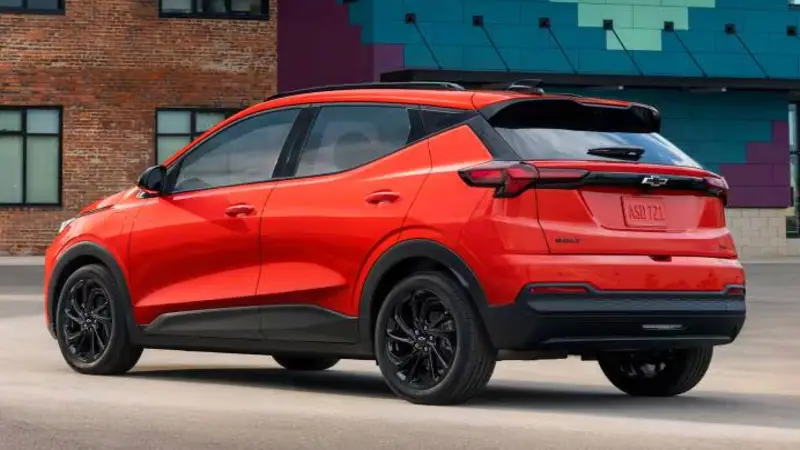
Along the sides, the Bolt is expected to retain its compact footprint while introducing more sculpted body panels, flush-style door handles, and aerodynamic alloy wheel designs ranging from approximately 17 to 19 inches in diameter, depending on trim level. These refinements should not only improve efficiency but also give a noticeably more upscale appearance.
The rear of the vehicle may feature slimmer LED taillights, a redesigned hatch, and cleaner body surfacing, giving the hatchback a more sophisticated presence. Chevrolet is likely to emphasize simplicity and efficiency, resulting in a design that feels modern without becoming overly futuristic. Overall, the redesigned Bolt EV is expected to retain its approachable personality while presenting a more mature and premium image that appeals to both returning owners and first-time EV buyers.
2027 Chevrolet Bolt EV Exterior and Interior
Although affordability remains one of the Bolt EV’s defining characteristics, the 2027 model is expected to elevate its interior quality and technological sophistication significantly. Chevrolet has made considerable progress in cabin design across its newest electric vehicles, and many of those improvements are expected to carry over to the next-generation Bolt.
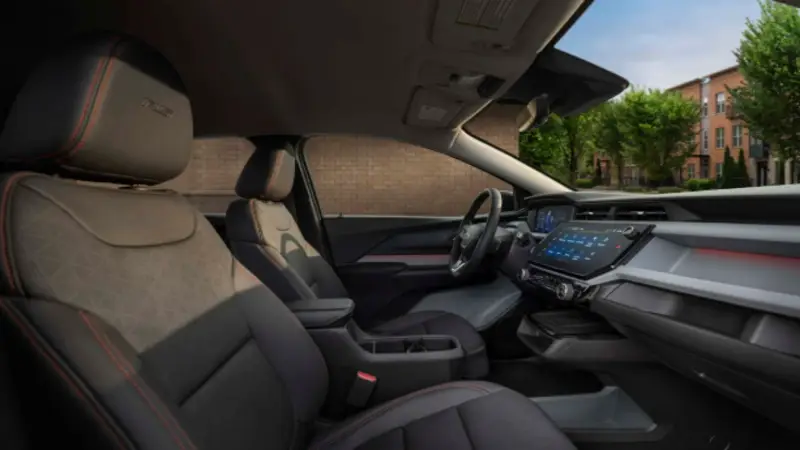
The dashboard will likely feature a clean, horizontal layout dominated by a large digital instrument cluster and an even larger central infotainment display. Chevrolet’s newest software platform is expected to deliver faster processing, sharper graphics, cloud-connected navigation, wireless smartphone integration, and regular over-the-air software updates that continue to improve the vehicle long after purchase.
Wireless Apple CarPlay and Android Auto may return if Chevrolet expands customer connectivity options, though the company has recently emphasized its Google-based infotainment ecosystem. Regardless of the final implementation, buyers should expect intuitive controls, responsive touchscreens, and enhanced voice-command functionality.
Material quality is also expected to improve substantially. Soft-touch dashboard surfaces, higher-quality upholstery, recycled interior materials, ambient lighting, and redesigned seats could make the cabin feel considerably more premium than previous generations while maintaining the Bolt’s focus on value.
Passenger comfort should remain one of the vehicle’s strongest advantages. Despite its compact exterior dimensions, clever packaging made possible by the battery mounted beneath the floor is expected to provide generous headroom and legroom for both front and rear occupants. Improved seat cushioning and enhanced sound insulation may further increase long-distance comfort.
Cargo versatility should continue to distinguish the Bolt EV from many compact electric sedans. The rear hatch design allows for convenient loading, while folding rear seats are expected to expand luggage capacity for larger items. This practicality has always been one of the Bolt’s greatest strengths and is unlikely to change with the new generation.
Convenience features such as wireless charging, heated and ventilated front seats, dual-zone climate control, panoramic camera systems, adaptive ambient lighting, and premium Bose audio may become available on higher trim levels, giving buyers access to luxury features previously reserved for more expensive electric vehicles.
2027 Chevrolet Bolt EV Engine and Performance
Although Chevrolet has not officially released complete specifications for the 2027 Chevrolet Bolt EV, expectations suggest the vehicle will benefit significantly from General Motors‘ Ultium battery technology, even as the company evolves the platform for smaller and more affordable electric vehicles.
The current Bolt’s single-motor front-wheel-drive layout has earned praise for its smooth operation and surprisingly lively performance. The next-generation model is expected to continue offering a single electric motor as standard, although improved efficiency and updated motor technology could increase power output to approximately 220-250 horsepower. This represents an estimate rather than confirmed production specifications.
Acceleration is expected to improve modestly, with the 2027 Bolt EV potentially reaching sixty miles per hour in approximately 6.5 seconds. Instant electric torque should continue providing brisk urban performance, quick highway merging, and a responsive driving experience that feels more energetic than many conventional compact hatchbacks.
Battery improvements are expected to represent the most significant advancement. Industry analysts anticipate a higher-capacity battery utilizing General Motors’ latest cell chemistry, potentially delivering an EPA-estimated driving range of approximately 320 to 360 miles, depending on final configuration. These figures remain speculative until Chevrolet publishes official certification results.
Charging capability is likewise expected to improve considerably. DC fast-charging rates may exceed 180 kW, allowing the battery to recharge from roughly 10 percent to 80 percent in about 25 minutes under ideal conditions. Compatibility with the North American Charging Standard (NACS) is also widely expected, providing convenient access to one of the continent’s largest fast-charging networks and significantly expanding charging opportunities for owners.
Ride quality should continue emphasizing comfort and everyday usability. Engineers are expected to refine suspension tuning, improve steering precision, and reduce road noise, creating a more mature driving experience while preserving the nimble handling that has always characterized the Bolt.
One area where Chevrolet is likely to make substantial progress is driver assistance technology. Enhanced adaptive cruise control, lane-centering assistance, automatic emergency braking, intelligent parking systems, and an updated version of General Motors’ Super Cruise hands-free highway driving system may become available on selected trims. However, final equipment levels have not yet been confirmed.
2027 Chevrolet Bolt EV Price and Release Date
Chevrolet has confirmed that the Bolt nameplate will return, but the company has not officially announced final pricing, complete specifications, or the production schedule for the 2027 Chevrolet Bolt EV. Consequently, all pricing estimates and launch timelines discussed here should be viewed as industry expectations rather than confirmed manufacturer information.
One of the Bolts’ greatest strengths has always been its affordability, and Chevrolet is expected to preserve that advantage despite significant technological improvements. Industry analysts anticipate that entry-level versions could start at approximately $32,000. At the same time, better-equipped trims featuring larger infotainment systems, upgraded interior materials, premium audio, and expanded driver-assistance technologies may range from $38,000 to $45,000, depending on available options.
Current expectations suggest Chevrolet could continue expanding production throughout 2026, with the fully updated 2027 model reaching dealerships during 2027. The timing would allow General Motors to refine its battery manufacturing capacity further while introducing the latest software and charging technologies across its expanding electric lineup.
Customers should also expect a variety of optional equipment packages covering advanced safety technologies, premium interior appointments, larger wheel designs, enhanced connectivity, panoramic glass roofing (if offered), and additional personalization options, designed to keep the Bolt competitive within the increasingly crowded affordable EV segment.
2027 Chevrolet Bolt EV Personal Note
The Chevrolet Bolt EV has always represented something larger than simply another electric vehicle. It demonstrated that practical, long-range electric transportation could be affordable, dependable, and enjoyable to drive without requiring buyers to spend luxury-car money. That philosophy helped make the Bolt one of the most influential electric vehicles of the past decade.
The anticipated 2027 Chevrolet Bolt EV appears ready to continue that legacy by embracing the latest advances in battery technology, digital connectivity, charging convenience, and interior refinement while remaining true to the model’s original mission. Rather than chasing extreme performance figures or unnecessary complexity, Chevrolet seems focused on building a smarter, more capable electric hatchback that serves the needs of everyday drivers.
It is important to recognize that many of the specifications, battery capacities, charging speeds, pricing estimates, driving range figures, and release timelines discussed throughout this article remain speculative. Chevrolet has not yet officially confirmed these details for the 2027 model, and the information presented here reflects current industry expectations, General Motors’ publicly announced electrification strategy, and the natural evolution of the Bolt nameplate.
If Chevrolet delivers on those expectations, the 2027 Chevrolet Bolt EV could once again become one of the most important electric vehicles on the market. With a refreshed design, improved battery efficiency, faster charging, advanced technology, practical interior space, and an accessible price point, it has the potential to redefine what buyers should expect from an affordable electric car and strengthen its reputation as one of the smartest choices in the rapidly evolving EV landscape.
Also read the article : https://autovoltahub.com/2027-bmw-ix2-suv-everything-we-know-about-bmws/