
The global electric vehicle (EV) industry is moving forward at an unprecedented pace. As a primary pioneer in electric mobility, Tesla continually pushes the boundaries of innovation to secure its position at the top of the market. Approaching 2027, the automotive world is fixated on the next generation of Elon Musk’s electric vehicle fleet.
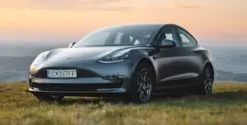
Various design patents, supply chain rumors, and technological leaks are beginning to reveal what the future of Tesla’s styling, powertrain capabilities, and pricing strategies will look like as the company aims to dominate the global market. This article dives deep into the comprehensive analysis of the upcoming Tesla generation, covering everything from aesthetic overhauls to technical performance.
Aesthetic Revolution Future Exterior and Interior Design
Tesla’s approach to vehicle design has always centered around two core philosophies: extreme aerodynamic efficiency and futuristic minimalism. For the lineup projected to mature by 2027, both philosophies are being elevated to a whole new level to counter aggressive pressure from emerging competitors.
Radical Aerodynamic Exterior Styling
On the outside, the next-generation Tesla vehicles are predicted to adopt a unified design language that blends the fluid, sweeping curves of the Model 3 and Model Y with the sharp, geometric lines inspired by the Cybertruck. The structural body will heavily utilize third-generation unibody megacastings, making the vehicle chassis significantly stiffer yet substantially lighter.

The front fascia completely abandons traditional grille outlines, favoring a seamless solid panel that integrates flawlessly with ultra-thin Matrix LED headlights. The roofline slopes smoothly toward the rear, creating a perfect fastback silhouette. This configuration is not just for visual aesthetics; it is designed to achieve an extraordinary coefficient of drag below 0.19 Cd. This metric is absolutely crucial for electric vehicles, as lower wind resistance directly translates to optimized battery consumption during high-speed highway cruising.
Traditional side mirrors are also highly anticipated to be entirely replaced by high-resolution side-view cameras integrated into the front fenders, delivering a completely clean, streamlined body surface. Furthermore, newly designed carbon-covered aero-wheels will come as standard to minimize air turbulence around the wheel wells.
Futuristic Cabin Centered on Comfort and Autonomy
Stepping inside the cabin, Tesla takes minimalism to uncharted territory. The dashboard is entirely devoid of physical buttons, traditional air vents, and even a standard instrument cluster behind the steering wheel. All driving telemetry and infotainment controls are centralized in a single 17-inch floating OLED display with an electrically powered swivel mechanism.
The steering system will likely offer an updated Yoke steering wheel equipped with advanced steer-by-wire technology. This innovation completely removes the mechanical connection between the steering wheel and the front axle, replacing it with electronic sensors that dynamically adjust the steering ratio based on vehicle speed—providing razor-sharp handling at high speeds and effortless maneuvering while parking.
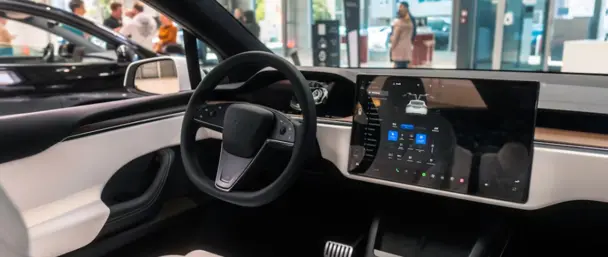
Sustainability takes center stage with interior materials featuring 100% premium vegan leather and recycled eco-fabrics covering the door panels and the headliner. The seats are ergonomically sculpted with built-in heating, ventilation, and adaptive posture sensors that automatically adjust lumbar and side bolstering based on the driver’s build. The entire cabin feels remarkably spacious thanks to a seamless panoramic glass roof that stretches from front to back without a center pillar, treated with advanced UV and infrared-blocking layers to keep the cabin cool.
The Next-Gen Powertrain Motors, Next-Gen Battery Cells, and 800V Architecture
The ultimate battlefield for electric vehicles lies in battery efficiency and electric motor performance. For the generation preparing to welcome 2027, Tesla is betting heavily on a brand-new powertrain architecture optimized for energy density and hyper-fast charging cycles.
Electric Motor Technology
Tesla remains committed to its highly refined Permanent Magnet Switched Reluctance Motors. For base model variants, the single motor powering the Rear-Wheel Drive (RWD) configuration will deliver significantly higher efficiency thanks to next-generation Silicon Carbide (SiC) inverters. These advanced inverters dramatically reduce energy loss generated as heat during power transfer from the battery pack to the motor.
For high-performance trims, such as the Dual-Motor All-Wheel Drive (AWD) or Tri-Motor Plaid variants, Tesla will deploy an intelligent torque-vectoring system. This system can distribute power to individual wheels within milliseconds based on real-time traction levels, ensuring explosive linear acceleration and superior cornering stability even in challenging weather conditions.
4680 Structural Battery Cell Evolution and 800-Volt Architecture
The core performance engine of future Tesla models relies on an upgraded iteration of the structural 4680 battery cells, utilizing a silicon-dominant anode formulation. Incorporating silicon allows the cells to store up to 20% more energy within the same physical footprint as conventional lithium-ion cells.
Additionally, Tesla is widely expected to migrate to an 800-Volt electrical architecture fully. marks a massive evolutionary leap from the 400-Volt system currently utilized across most of Tesla’s current lineup. With an 800V system, the vehicle can accept significantly higher charging currents without generating excessive heat in the wiring looms or battery modules. When plugged into a next-generation Tesla Supercharger V5 station, a 10% to 80% charge can be achieved in just 12 to 15 minutes, drastically minimizing downtime for long-distance commuters.
Estimated Release Window and Global Pricing Strategy
Tesla’s future launch schedule relies entirely on the readiness of its global Gigafactories to implement the revolutionary “Unboxed” manufacturing process. This modular assembly method builds separate sections of the car independently before snapping them together in the final stage, a breakthrough claimed to slash production costs by up to 50%.
Strategic Models and Expected Release Dates
Based on recent product development cycles and official comments made during shareholder meetings, Tesla’s vehicle lineup, slated to hit full production scale around 2027, includes several key models:
- Tesla Next-Gen Compact EV (Model 2 / Cybercab): This highly anticipated affordable electric car project is scheduled to enter early production lines between late 2025 and 2026, positioning 2027 as the golden year where this vehicle hits global roads in massive volumes.
- Tesla Model Y Facelift (Next-Gen Juniper): The comprehensive overhaul of the world’s best-selling SUV will receive structural battery upgrades and a fresh chassis, ready for mass distribution by 2027.
- Tesla Roadster Gen 2: Tesla’s legendary hypercar, which faced multiple delays, is expected to enter limited boutique production by late 2026 or early 2027 as a halo showcase of Tesla’s absolute peak engineering capabilities.
Estimated Market Pricing
Leveraging the extreme cost savings of the Unboxed manufacturing method and reducing battery raw material costs, Tesla is actively positioning its pricing matrix to counter aggressive market expansion by Chinese EV manufacturers.
- Next-Gen Compact EV (Model 2) : Projected to launch with a highly competitive starting price of around USD 25.000. This model will serve as Tesla’s primary weapon to capture the mass market seeking high-quality, accessible electric mobility.
- Next-Gen Mid-Size SUV (Model Y) : Expected to maintain a highly strategic price window between USD 42.000 and USD 52.000, depending on battery capacity and drivetrain selections.
- Premium Hypercar Varian (Roadster Gen 2) : Positioned as an elite, ultra-high-performance vehicle, this model will carry a premium price tag north of USD 200.000, catering strictly to collectors and hardcore speed enthusiasts.
Conclusion : Tesla’s Readiness for the Next Era of EV Warfare
Tesla’s upcoming vehicle portfolio, prepared for 2027, demonstrates that the company is not merely focused on selling cars but on fundamentally redefining the future of human mobility. By combining highly aerodynamic body styling, a cabin controlled entirely by AI-driven computing, a highly efficient 800V powertrain, and consumer-friendly pricing driven by manufacturing breakthroughs, Tesla stands ready to face the next massive wave of global competition. For consumers and technology enthusiasts alike, these developments ensure the future of electric mobility will be faster, more accessible, and incredibly exciting.
Read also the latest automotive news at : https://autovoltahub.com/