2027 Farizon SV Introduction – The commercial vehicle market is undergoing one of the most significant transformations in its history. As governments tighten emissions regulations and businesses look to reduce operating costs, electric vans have rapidly evolved from niche products into essential fleet vehicles. Delivery companies, logistics providers, municipal services, and small businesses are increasingly investing in battery-electric commercial vehicles that promise lower maintenance costs, quieter operation, and zero tailpipe emissions.
Among the newest entrants attracting global attention is the Farizon SV, an all-electric commercial van developed by the Geely Holding Group. Although some online discussions mistakenly associate the model with GWM (Great Wall Motor), the Farizon SV is a Farizon/Geely product, not a GWM vehicle. Looking ahead, the anticipated 2027 Farizon SV is expected to build upon the strengths of the current model with improvements in battery technology, digital fleet management, driving efficiency, and overall practicality.
While Farizon has not officially announced a 2027 model, industry analysts expect the company to continue refining its dedicated electric van platform as competition intensifies across Europe and Asia. Rivals such as the Ford E-Transit, Mercedes-Benz eSprinter, Volkswagen ID. Buzz Cargo, Renault Master E-Tech, Maxus eDeliver lineup, and other next-generation commercial EVs continue raising expectations regarding driving range, charging capability, cargo capacity, and total cost of ownership.
Rather than pursuing dramatic styling changes, the 2027 Farizon SV is widely expected to focus on improving everyday usability for businesses. Fleet operators increasingly value reliability, software integration, energy efficiency, and predictable operating costs over headline performance figures. If current industry expectations prove accurate, the upcoming model could become an even stronger contender in the rapidly expanding electric commercial vehicle segment.
2027 Farizon SV Redesign
Although Farizon has not officially revealed its plans for the 2027 model year, industry observers anticipate a thoughtful evolution of the SV that prioritizes efficiency, durability, and advanced fleet technology. Commercial vehicles must balance functionality with long-term operating costs, and every design decision is expected to support that objective.
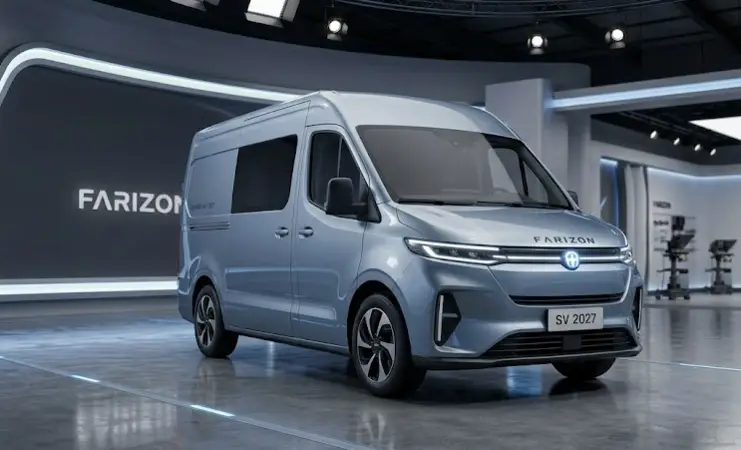
The front fascia will likely receive subtle refinements rather than a complete redesign. A cleaner bumper design, slimmer LED lighting, and revised aerodynamic detailing could help reduce drag while giving the van a more modern appearance. Because electric vans require less cooling airflow than diesel-powered alternatives, the front end is expected to remain relatively smooth, improving aerodynamic efficiency and extending driving range.
Engineers are also expected to continue optimizing the vehicle’s structure. Improvements in battery packaging and chassis integration could increase cargo capacity while maintaining excellent structural rigidity. Reducing overall weight without compromising durability remains one of the industry’s primary engineering goals, and the 2027 Farizon SV is expected to benefit from these ongoing developments.
Aerodynamics are likely to become even more important throughout the redesign. Revised mirrors, smoother underbody panels, optimized wheel designs, and improved airflow management around the rear of the vehicle could all contribute to measurable efficiency gains. While these refinements may appear subtle, they can significantly influence real-world operating costs for fleet customers covering thousands of miles each month.
Software development is also expected to play a central role. Modern commercial vehicles increasingly rely on connected digital ecosystems, and Farizon is likely to expand its over-the-air software update capability. Fleet managers may receive improvements to navigation, battery optimization, charging management, and vehicle diagnostics without requiring workshop visits.
Artificial intelligence and cloud-based fleet management could become even more sophisticated. Future versions may automatically optimize delivery routes, monitor vehicle health, predict maintenance requirements, and analyze driver efficiency to help businesses reduce operating expenses.
2027 Farizon SV Exterior and Interior
The exterior design of the 2027 Farizon SV is expected to continue emphasizing functionality while incorporating a more contemporary visual identity. Unlike passenger vehicles, commercial vans must prioritize accessibility, cargo volume, and durability, yet modern buyers increasingly appreciate refined styling that projects a professional image.
The front of the van will likely feature slimmer LED headlights accompanied by a redesigned lighting signature that enhances visibility while reducing energy consumption. A reshaped bumper with integrated aerodynamic elements could improve efficiency without compromising durability during daily commercial use.
From the side, the familiar box-shaped silhouette is expected to remain largely unchanged because maximizing interior cargo space remains the highest priority. However, smoother body contours, optimized wheel arches, and redesigned alloy or steel wheels may help reduce aerodynamic drag. Multiple roof heights and wheelbase options are expected to continue serving businesses with varying operational requirements.
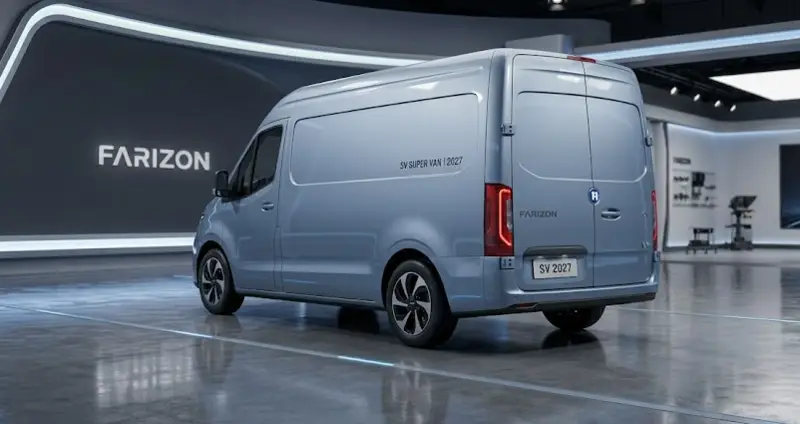
The rear of the vehicle is likely to receive updated LED lighting and improved cargo door mechanisms designed to simplify loading and unloading. Lower cargo floor heights and wider rear door openings may further enhance practicality, especially for urban delivery operations.
Inside the cabin, the 2027 Farizon SV is expected to introduce noticeable improvements in comfort and technology. Commercial drivers often spend entire workdays behind the wheel, making ergonomic refinement increasingly important.
The dashboard is likely to feature a cleaner design centered around a larger touchscreen infotainment display powered by Farizon’s latest connected operating system. Wireless smartphone integration, cloud-based navigation, fleet communication tools, and voice recognition are all expected to become more advanced.
A fully digital instrument cluster could provide customizable displays that prioritize battery status, navigation, vehicle diagnostics, efficiency information, or delivery route guidance depending on operational needs.
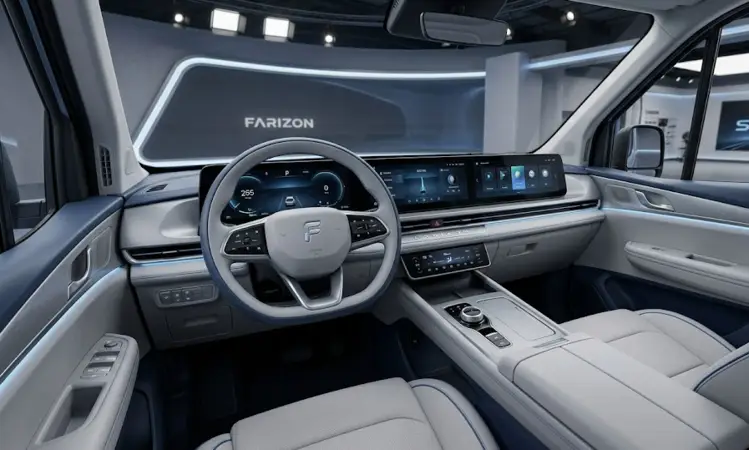
Seat comfort is also expected to improve, with better lumbar support, increased adjustment range, and more durable upholstery materials designed for heavy daily use. Additional storage compartments, wireless charging, USB-C ports, and practical work surfaces may further transform the cabin into an efficient mobile workspace.
The cargo compartment will remain the van’s defining feature. Although official dimensions for a future model remain unavailable, industry expectations suggest that Farizon will continue offering multiple cargo configurations capable of serving courier services, tradespeople, municipal fleets, and logistics operators.
Enhanced insulation may also reduce cabin noise, creating a more comfortable driving experience during long work shifts. Improved climate control efficiency could further contribute to both driver comfort and overall energy management.
2027 Farizon SV Engine and Performance
As an all-electric commercial vehicle, the Farizon SV focuses on delivering smooth, dependable performance rather than outright speed. Instant electric torque, predictable acceleration, and efficient energy consumption remain the qualities that matter most to commercial customers.
Farizon has not announced technical specifications for a 2027 model, but industry analysts expect multiple battery and powertrain configurations to continue serving different business requirements.
Entry-level versions may produce approximately 180 to 220 horsepower, providing sufficient performance for urban delivery routes and regional transportation. Higher-capacity versions could potentially generate closer to 270 horsepower, particularly in configurations designed for heavier payloads or higher-speed highway operation.
Electric torque is expected to remain one of the vehicle’s greatest strengths. Immediate power delivery enables confident acceleration even when carrying substantial cargo, while the absence of gear changes contributes to smooth and predictable driving characteristics.
Battery technology is widely expected to receive meaningful improvements. could increase usable energy capacity while improving durability under demanding commercial operating conditions.
Depending on battery configuration, industry observers estimate that the 2027 Farizon SV could offer driving ranges between approximately 220 and 320 miles under the WLTP testing cycle. Actual real-world range would naturally vary depending on payload, driving style, weather, and operating environment. Since Farizon has not confirmed these figures, they should be regarded as informed expectations rather than official specifications.
Charging performance is also expected to improve. Under optimal DC fast-charging conditions, the battery may recharge from approximately 10 to 80 percent in roughly 25 to 35 minutes, helping minimize vehicle downtime. AC charging for overnight fleet operations is likewise expected to remain an important feature, allowing businesses to begin each workday with fully charged vehicles.
Ride quality could benefit from revised suspension tuning and improved chassis calibration. Engineers are expected to balance payload capability with greater driver comfort, particularly for operators spending extended hours on the road.
Advanced driver assistance technology will likely continue expanding. Adaptive cruise control, lane-keeping assistance, automatic emergency braking, blind-spot monitoring, cross-traffic alerts, and intelligent parking systems are all expected to become increasingly common across future Farizon commercial vehicles.
Connected fleet management may ultimately become one of the vehicle’s strongest advantages. Real-time battery monitoring, predictive maintenance, remote diagnostics, charging management, and vehicle utilization analysis could help fleet operators maximize productivity while minimizing operational costs.
2027 Farizon SV Price and Release Date
At the time of writing, Farizon has not officially announced pricing or release details for a 2027 Farizon SV. Consequently, all current expectations should be viewed as preliminary estimates rather than confirmed information.
Industry analysts anticipate that pricing will remain competitive within the growing electric commercial van segment. Depending on battery size, cargo configuration, and regional specifications, entry-level models may begin at approximately $48,000 to $55,000. In comparison, larger battery variants and higher-capacity commercial configurations could range between $58,000 and $72,000 before local incentives and taxes. These figures are speculative and may differ substantially once official pricing is announced.
Production of an updated model, if introduced, could begin during late 2026 or early 2027, with customer deliveries following during 2027. Availability will likely vary by market, with Europe and selected Asian regions expected to remain key priorities for Farizon’s expanding international strategy.
Government incentives for zero emission commercial vehicles may continue influencing effective purchase prices, although eligibility will depend on local regulations and future policy developments.
2027 Farizon SV Personal Note
The Farizon SV represents an important example of how commercial vehicles are evolving beyond simple transportation tools into connected, intelligent business assets. Modern electric vans are no longer judged solely by payload or cargo volume; businesses increasingly evaluate software integration, charging efficiency, operating costs, driver comfort, and long-term reliability.
The anticipated 2027 Farizon SV appears poised to continue that evolution through practical refinements rather than dramatic reinvention. Improvements in battery technology, digital connectivity, charging capability, and interior refinement could make the vehicle even more attractive to fleet operators seeking dependable zero-emission transportation.
Perhaps the most compelling aspect of the Farizon SV is its balanced philosophy. Rather than focusing on extreme performance or luxury, it is expected to prioritize the everyday needs of commercial customers, where productivity, uptime, efficiency, and predictable ownership costs matter most. That practical approach is likely to remain one of its greatest competitive strengths.
Until Farizon officially unveils any 2027 updates, many technical specifications, pricing details, and launch schedules remain unconfirmed. Nevertheless, current industry expectations suggest that the next Farizon SV could become an even stronger competitor in the global electric van market. If the company successfully delivers meaningful improvements while maintaining competitive pricing and dependable commercial capability, the 2027 Farizon SV may emerge as one of the most compelling electric work vans available for businesses embracing the future of sustainable transportation.
Also read the article : https://autovoltahub.com/2027-geely-star-wish-everything-we-expect-from/